

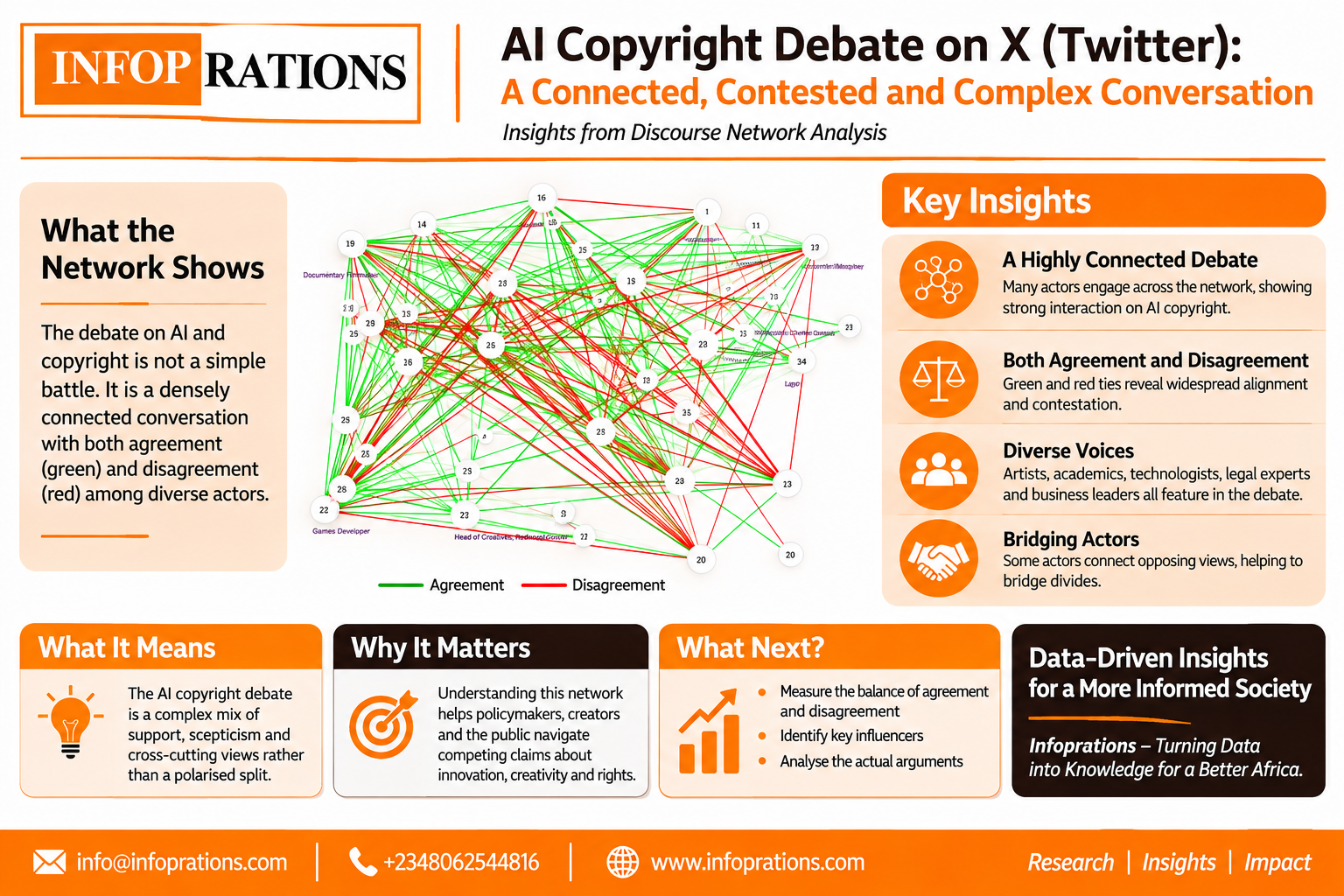
Artificial intelligence is changing how creative content is produced, distributed and consumed. From generating images and writing stories to composing music and producing videos, AI tools are challenging established ideas about creativity and ownership. Yet, beneath the excitement surrounding these developments lies a difficult question: when artificial intelligence learns from existing creative works, whose rights are being protected, and whose interests are being compromised?
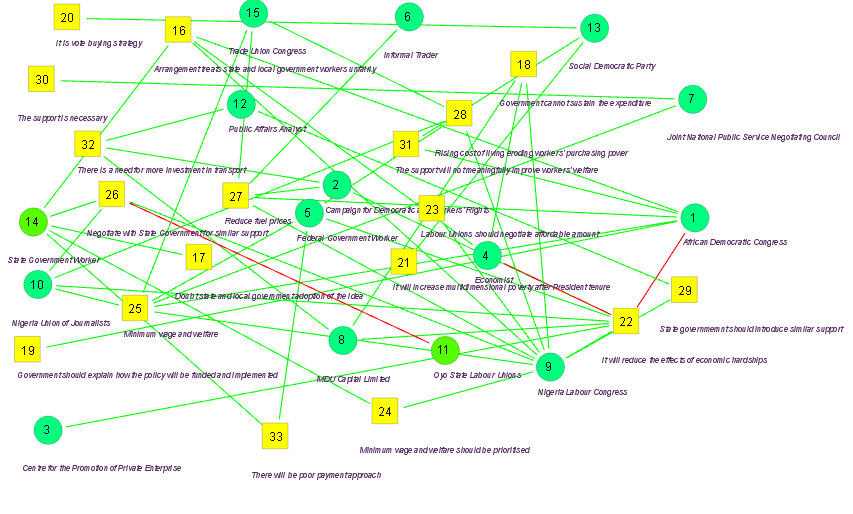
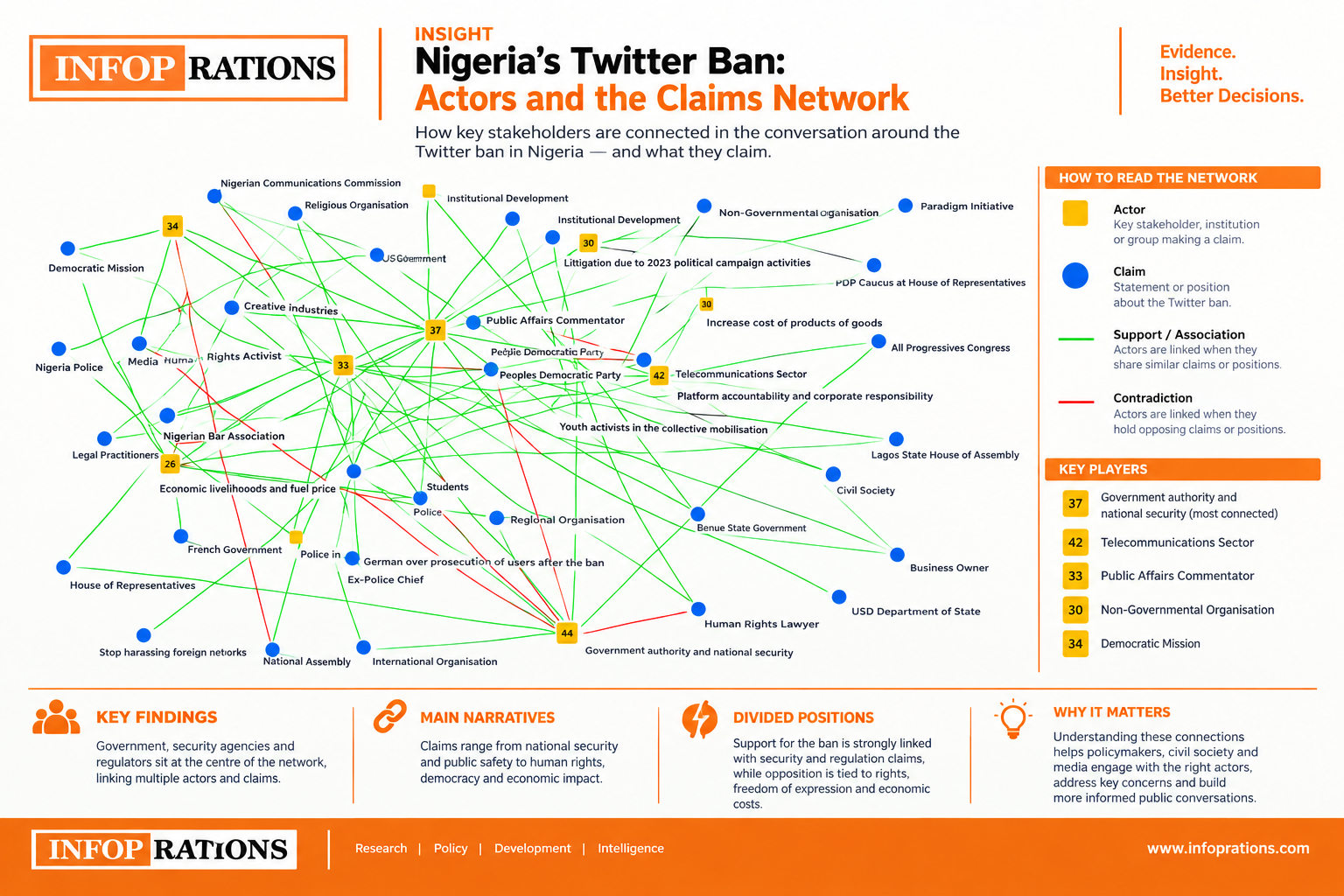
Conversations on X (formerly Twitter) reveal that this question has become a subject of considerable disagreement. An examination of the relationships between participants in the AI copyright debate presents a divided conversation involving creative professionals, technology entrepreneurs, AI engineers, lawyers, academics, writers and other public voices. Their arguments reflect competing interpretations of whether the use of creative materials by artificial intelligence constitutes an infringement of intellectual property rights.
The discussion reveals two broad positions. One argues that AI infringes on intellectual property rights, particularly when copyrighted materials are used to train AI systems or generate commercial outputs without the knowledge, consent or compensation of their original creators. The opposing position maintains that AI use does not necessarily constitute copyright infringement, pointing to questions about technological innovation, the transformation of existing materials and the application of copyright law to emerging technologies.
What makes this debate particularly interesting is that the disagreement is not confined to two completely separate groups. Arguments supporting and opposing claims of infringement appear across conversations involving people with different professional backgrounds. This suggests that the issue is more complicated than a straightforward confrontation between artists and technology companies.
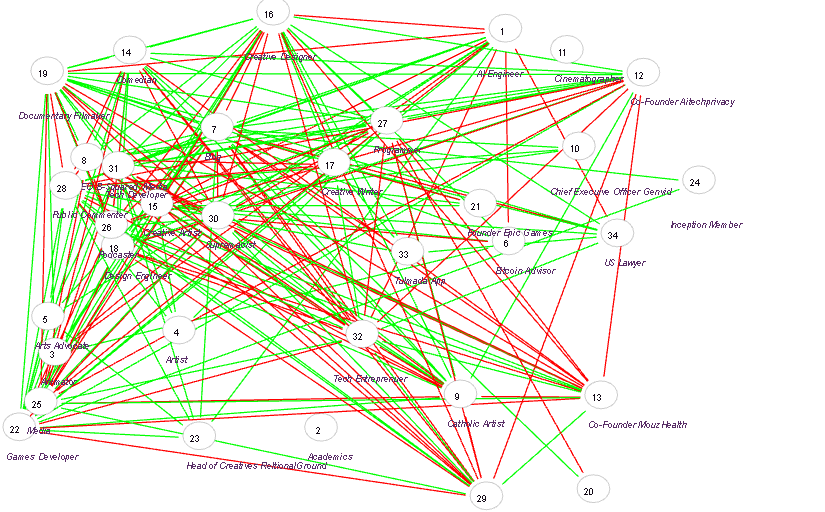
For creative professionals, the concern is fundamentally about ownership, recognition and economic survival. Artists, writers, filmmakers and other content creators invest time, skills and resources in producing original works. When these works become part of the materials used to develop AI systems, questions arise about whether creators should have the right to grant or withhold permission, receive compensation or exercise some control over how their work is subsequently used. The concern becomes more pronounced when AI-generated content competes directly with the work of the people whose creative materials may have contributed to developing the technology.
For technology professionals and entrepreneurs, however, the discussion also involves the future of innovation. Restricting access to existing materials could have implications for how AI systems are developed and improved. From this perspective, the challenge is to establish appropriate boundaries without creating rules that unnecessarily restrict technological advancement. The debate therefore reflects a tension between protecting the rights of existing creators and preserving opportunities for new forms of creativity and innovation.
The participation of legal professionals introduces another important dimension. Copyright laws were largely developed around identifiable human creators, original works and established forms of reproduction and distribution. Artificial intelligence complicates these assumptions. Questions about training materials, ownership of generated outputs, substantial similarity and responsibility for unauthorised use require careful legal interpretation. The fact that participants disagree about infringement also highlights the need for clearer public understanding of what existing laws protect and where regulatory uncertainties remain.
Beyond the immediate disagreement, the conversation raises a broader question about the distribution of economic value in the digital economy. AI companies can generate commercial opportunities from systems trained on enormous collections of information and creative materials. However, the individuals whose work contributes to these systems may not necessarily share in the resulting economic benefits. This creates an important public policy challenge: how can society encourage technological development while ensuring that the people whose creative contributions sustain it are not unfairly disadvantaged?
The debate also exposes the limitations of treating copyright as merely a legal issue. It is simultaneously an economic, cultural and social question. Creative work represents more than an item that can be reproduced or processed by software. It carries personal investment, professional identity, cultural expression and economic value. Any discussion about the future of AI must therefore consider the people and communities whose creative contributions make technological development possible.
The competing claims surrounding AI copyright should not be reduced to choosing between technological progress and the protection of creative rights. Both matter. The more productive conversation is about establishing conditions under which innovation and creative ownership can coexist.
This requires meaningful engagement among technology companies, creators, legal professionals, policymakers and the wider public. It also requires greater transparency about the materials used to train AI systems, clearer rules governing permission and compensation, and accessible mechanisms through which creators can challenge the unauthorised use of their work.
The AI copyright debate on X offers a glimpse into a society still negotiating these boundaries. Its competing arguments demonstrate that technological change often moves faster than the laws, institutions and social agreements needed to govern it. The challenge ahead is not simply to determine whether AI infringes intellectual property rights, but to establish who gets to define the rules, whose interests those rules protect and how the benefits of artificial intelligence should be shared.


Leave a Reply