


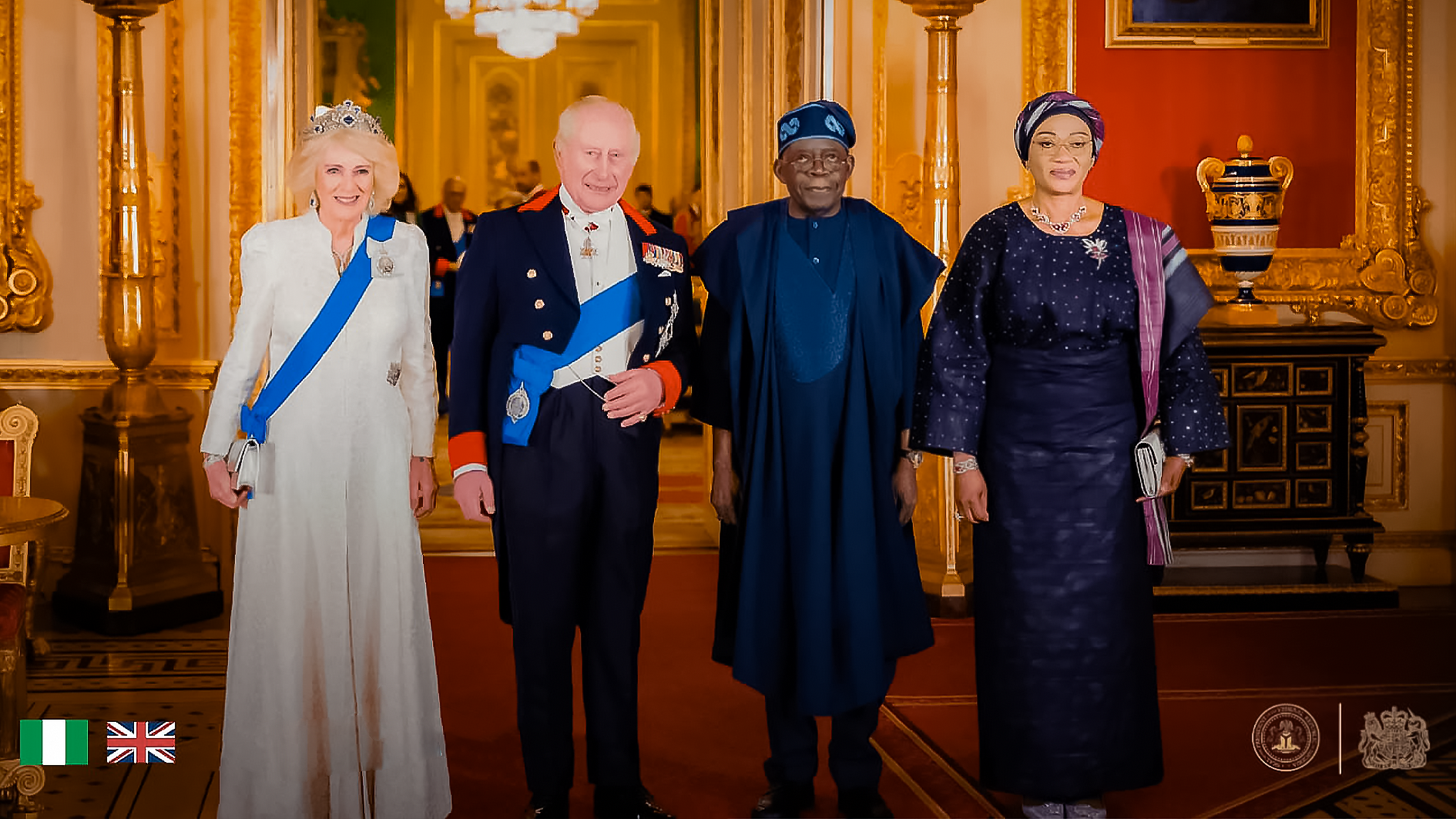
When President Bola Ahmed Tinubu and King Charles III exchanged speeches at Windsor Castle, the moment carried far more weight than ceremonial diplomacy. Beneath the formal language and polished tone was a clear effort by both leaders to redefine a complex relationship for a new era.
At first glance, both speeches emphasised friendship, shared values, and a common future. Our analysis shows two distinct approaches that shape that relationship. One focused on positioning Nigeria within a long-established system. The other focused on adapting that system while maintaining its centre of gravity.
President Tinubu’s speech leaned heavily on history and institutional alignment. By referencing milestones such as the Magna Carta and the evolution of parliamentary governance, he connected Nigeria’s democratic journey to British traditions. This was a deliberate choice. It reinforced Nigeria’s credibility on the global stage and highlighted continuity between the two nations’ systems of government.
He also placed strong emphasis on people as connectors. The Nigerian diaspora in the United Kingdom, along with high-profile figures in sports, healthcare, and business, were presented as living proof of the depth of the relationship. This framing turned migration into a strategic advantage and positioned Nigerians not just as participants in British society, but as contributors to its success.
The overall message was clear. Nigeria is not on the margins of global influence. It is deeply embedded in a network of relationships that matter. However, this approach also revealed an underlying reality. Much of that integration still flows through structures and institutions shaped by the United Kingdom.
King Charles took a broader and more layered approach. His speech moved beyond formal ties and into culture, identity, and shared experience. By using Yoruba, Hausa, and Igbo expressions, and even referencing the lighthearted debate around Jollof rice, he brought Nigerian culture into the heart of the British royal setting. This was more than symbolic. It signalled a willingness to recognise and incorporate Nigeria’s influence into the United Kingdom’s own narrative.
At the same time, the King reinforced the strength of economic and institutional ties. He highlighted trade flows, investment figures, and partnerships in finance, education, and technology. These details served a clear purpose. They grounded the relationship in measurable outcomes and presented it as balanced and mutually beneficial.
Yet this is where the speeches begin to diverge in subtle but important ways. While both leaders spoke of equality, the structure of the relationship tells a more complex story. The United Kingdom remains a central hub for finance, regulation, and global access. Nigeria’s growing influence is undeniable, but it often operates through systems that are still anchored in London.
Another key difference lies in how each leader addressed the past. Tinubu chose to focus almost entirely on the future, avoiding direct engagement with the legacy of colonialism. King Charles acknowledged that history has left “painful marks,” but quickly shifted the conversation toward shared progress. This careful balance allowed both sides to recognise the past without letting it disrupt the tone of partnership.
Security and global influence also featured prominently. Tinubu framed Nigeria as a critical player in regional stability, particularly in West Africa. The King reinforced this by emphasising cooperation, not just in security but also in addressing broader global challenges. In doing so, he elevated Nigeria’s role while reinforcing the importance of working together.
What emerges from both speeches is a relationship that is evolving rather than being reinvented. Nigeria is asserting itself as a major economic and cultural force, while the United Kingdom is adapting to that reality by opening space for greater inclusion and collaboration. At the same time, the foundations of the relationship remain largely intact.
For business leaders and policymakers, the takeaway is clear. The Nigeria–UK partnership is not just about history or diplomacy. It is about how two nations with deep, sometimes difficult ties are finding ways to align their interests in a rapidly changing world. Opportunities in trade, investment, technology, and talent are growing, but they exist within a framework that still reflects longstanding structures of influence.
The real test going forward will be whether this partnership can move beyond its inherited patterns. Can it deliver genuinely balanced economic outcomes? Can it create pathways that allow both countries to shape the future on equal terms? And can it turn cultural connection into lasting strategic advantage?








Leave a Reply