

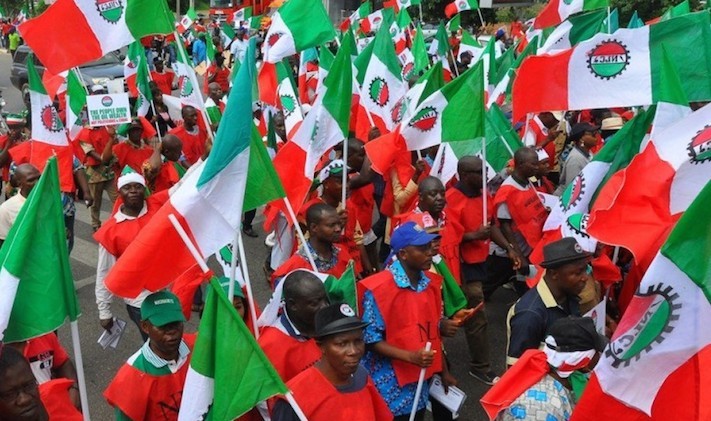
The “No Work, No Pay” policy has become one of the most debated instruments in Nigeria’s labour relations. It represents the tension between the rights of workers to protest and the government’s responsibility to maintain essential services. Over the years, it has moved from a legal clause in a statute to a recurring flashpoint in Nigeria’s industrial landscape, shaping how governments and unions negotiate power, fairness, and productivity.
The Legal Foundation and Rationale
The policy is rooted in Section 43(1) of the Trade Disputes Act, which clearly states that a worker who participates in a strike is not entitled to wages or remuneration for the duration of that strike. This clause reflects a contractual logic that pay should correspond with work done. For the government, the rule is both preventive and disciplinary. It aims to deter prolonged industrial actions and ensure that essential services are not abandoned without consequence. The courts have consistently upheld this principle, most notably when the National Industrial Court ruled in favor of the Federal Government in the dispute with the Academic Staff Union of Universities, confirming that withholding pay during a strike was lawful.
From a policy perspective, “No Work, No Pay” is meant to promote discipline in the public service and accountability among employees. It also communicates to the public that the state will not fund work stoppages that paralyze critical sectors. However, this narrow interpretation of fairness often collides with broader questions about government responsibility in honoring agreements and maintaining conducive working conditions.
Federal Implementation and the FCT Experience
The Federal Government has been the most frequent enforcer of the policy, particularly in education and health sectors. During the 2022 ASUU strike, the government withheld salaries for several months, setting a national precedent for strict enforcement. The FCT, being home to federal institutions and agencies, has witnessed several episodes of the policy in action. For instance, FCT area council workers in 2022 went on strike over unpaid salaries, triggering a standoff that mirrored the same logic: no pay without work and no work without pay. Primary school teachers in the FCT have also used this rhetoric to demand better implementation of the minimum wage, showing that both employers and employees invoke the same principle when it suits their cause.
These cases establish how “No Work, No Pay” is not only a legal tool but also a moral argument that cuts both ways. Workers see it as a matter of justice when government fails to fulfill its part of the employment contract, while authorities use it as leverage to discourage strikes and protect public interests.
State-Level Adaptations and Historical Shifts
Across Nigeria’s 36 states, the policy has evolved unevenly. Some states such as Oyo, Ogun, and Rivers have formally invoked or threatened it during strikes, while others apply it silently through administrative sanctions. The earliest state-level enforcement can be traced to the mid-2010s when states facing fiscal crises began citing “No Work, No Pay” to control wage bills during industrial actions. By 2018, Oyo State had used it to pressure civil servants to return to work. Since then, it has become part of the vocabulary of governance in many state houses.
The uneven application reflects differences in political strategy and financial capacity. Wealthier states can afford to negotiate settlements, while cash-strapped ones resort to legalism to manage disputes. In all cases, the policy functions as both deterrent and bargaining chip. It often forces unions to the negotiation table but also deepens mistrust between government and labor.
The Future of Fairness and Industrial Peace
The persistence of “No Work, No Pay” raises deeper questions about how Nigeria balances workers’ rights with economic stability. While the law protects the employer’s interest, it does little to address the conditions that provoke strikes in the first place. Many unions argue for a reciprocal principle of “No Pay, No Work” to hold government accountable when it fails to meet contractual or welfare obligations. Industrial harmony cannot thrive where the rule is one-sided.










Leave a Reply