

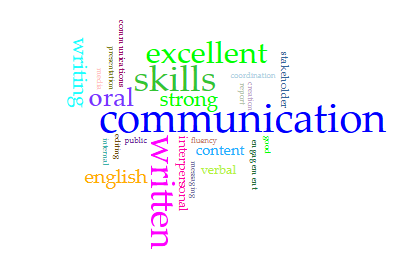
Nigeria’s economy is showing signs of renewed momentum. In the second quarter of 2025 gross domestic product grew by 4.23 percent year on year, its strongest quarterly expansion in four years, thanks largely to a rebound in oil and pickups in services. At the same time employment metrics suggest both opportunity and challenge. By Q1 2024 some 73.2 percent of working-age Nigerians were employed (in any capacity) though underemployment remains high. The 2025 Infoprations Communication Skills Demand Index examined hundreds of job listings across sectors, seeking to understand what communication abilities employers now prize most. The results show that in this climate of cautious economic optimism, communication competes with technical competence for better career outcomes.

What Employers Now Require: Communication as a Core Competency
The Index surfaced a consistent set of communication skills demanded across roles. At the foundation lies strong oral and written fluency in English, often coupled with a local language such as Hausa. In many NGO, educational, or health roles this bilingual demand enables community interface. Beyond foundation fluency, employers expect candidates to craft clear reports, prepare advocacy documents, take meeting minutes, edit content, and manage internal or public communications.
But the demand does not stop there. Many job descriptions call for stakeholder engagement, liaison with government or private sector actors, and persuasive public speaking or presentation skills. Digital content creation, social media fluency, and campaign messaging appear increasingly in non-marketing roles. The Index also found frequent mention of interpersonal communication, people management, facilitation, and negotiation — skills that enable teams to collaborate and organizations to influence external audiences.
Sectoral Patterns: Mapping Skills to Industries
By aligning the communication demands with sectors, the Index reveals clear patterns. In NGOs and development organizations the heaviest demand is on multilingual advocacy, stakeholder liaison, and detailed reporting. In health and education, communication roles often span public engagement, training, and localized outreach. In finance and corporate, the emphasis tends to be precise written reports, internal communication, presentation of data, and stakeholder messaging.

In technical roles, especially engineering or manufacturing, employers often require coordination, documentation, and the ability to communicate technical ideas to nontechnical teams. In the technology sector, content creation, public speaking (for developer advocacy), and digital communication are more common demands. Sales and marketing roles emphasize persuasion, negotiation, and client communication. Government, public institutions, or diplomatic roles increasingly expect strategic messaging, representation, and media engagements.
These sectoral trends point to the conclusion that communication is no longer a soft add-on; it is a functional core requirement across disciplines. A software engineer, financial analyst, or health program officer is just as likely to be judged by communication skill as by domain knowledge.
Turning Insight into Action: What Job Seekers and Employers Must Do
The insights from the Infoprations 2025 Index imply that communication capability is a differentiator in Nigeria’s evolving job market. For job seekers, honing writing clarity, public speaking, stakeholder messaging, and digital content skills is no longer optional. It is essential. Prospective candidates should build portfolios of written work, volunteer for presentation opportunities, and practice stakeholder engagement in projects.
For employers and human resources professionals, communication skills should be assessed deliberately during recruitment. Interview questions, writing tests, and presentation tasks should be standard parts of hiring. Moreover, organizations must invest in internal training programs to uplift communication competencies among staff, especially mid-level managers.
As Nigeria’s economy seeks to absorb millions entering the labor force each year, weak job creation remains a bottleneck. The ILO notes that rapid population growth, estimated at 2.6 percent per year, compounds pressure on the labor market.











Leave a Reply